
“You either die a hero, or live long enough to see yourself become the villain.” – Harvey Dent
The superhero movie landscape was vastly different in the mid-2000s. Cinematic universes were not exactly a thing yet, and the genre was only starting to gain mainstream acceptance and widespread success in the big screen, thanks to the likes of Sam Raimi’s Spider-Man and Bryan Singer’s X-Men movies. These films, along with 1998’s Blade, opened the door to more obscure comic book properties getting their share of the spotlight. As a result, we got Daredevil, Fantastic Four, Ghost Rider, and Catwoman, all of which we’d rather forget actually existed.
Then in 2008, the industry would experience an unprecedented, significant shift with the release of two movies that laid the groundwork for how the genre would be treated by both audience and studios moving forward. Jon Favreau’s Iron Man kickstarted a massive, multi-billion dollar inter-connected franchise called the Marvel Cinematic Universe. On the other hand, Christopher Nolan’s The Dark Knight redefined what a superhero film could be. It was a such a big hit that it’s the first superhero movie in history to reach $1 billion in worldwide gross, a feat that its sequel, The Dark Knight Rises, subsequently achieved as well.
But before Nolan was handed the keys to DC Comics’ most profitable character, Batman was already a distressed property for Warner Bros. The increasingly campy nature of the Batman films in the ’90s, which culminated in 1997’s Batman & Robin, left a sour taste in the everyone’s mouths that Warner Bros. stopped making Batman films altogether. Then finally rebooting it almost a decade later, perfectly in time for the beginning of a massive superhero boom.
With a clean slate, Christopher Nolan took the opportunity to make the movie he wanted, giving the property a back-to-basics reboot. He wasn’t bound by the pressure of integrating it into a larger cinematic universe or setting up future sequels (unlike most films in the genre today). With a self-contained story and strong cast, Batman Begins breathed new life and interest into the franchise.
While Batman Begins still incorporated traditional superhero elements, Nolan went into the route of a realistic, gritty crime thriller with The Dark Knight, incorporating techniques and themes that he had already experimented in his neo-noir crime dramas like Memento and Insomnia. This grounded approach allowed him to tell a more personal story that dives deep into the inherent natures involving three central characters – Batman, the Joker and Harvey Dent.
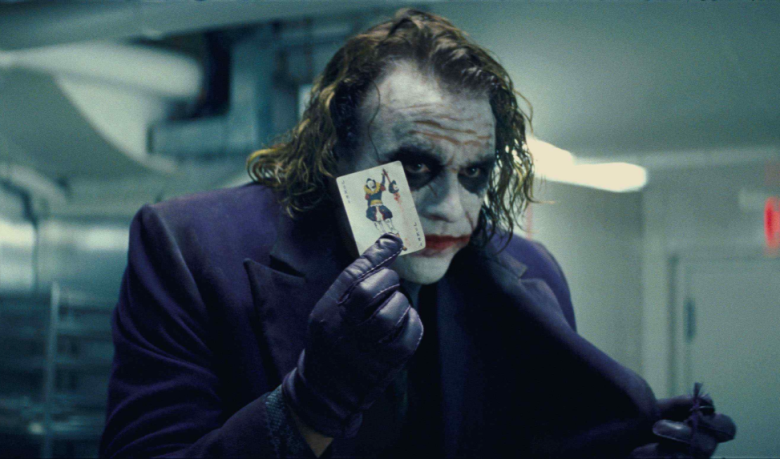
Set several months after Batman Begins, the Caped Crusader has established a partnership with GCPD’s Lt. Jim Gordon, and is now a symbol of fear amongst the gangs and criminals of Gotham. The night belongs to the Batman, and when the bat symbol shines bright in the night sky, criminals know that he is out on the hunt. This new status quo has prompted the mob leaders to set their regular meetings during the day, a move that the Joker mocks them for.
The Dark Knight is as much about its compelling characters as it is about the plot, and aims to deconstruct the traditional comic book hero vs. villain story. In a world of cops and gangsters, Batman and the Joker are forces of nature that represent the two extremes of Gotham’s spectrum. Nolan’s Batman doesn’t operate like the valiant hero we typically see in other superhero movies, but more like a hardened cop not burdened by the limits of the law. So Batman’s main resolve is to push attorney general Harvey Dent as Gotham’s true hero, someone who obeys and believes in the power of law. However, Dent’s story ultimately ends in a tragedy when he ends up scarred and becomes Two-Face as a result of the Joker’s continuous effort to corrupt the natural order of things. Most superhero villains tend to be grand in their motivations, seeking world domination or the eradication of mankind, and so on. Nolan’s Joker, played by the wonderful Heath Ledger, is an enigmatic agent of chaos with no obvious motivation, an anarchist that “just wants to watch the world burn,” as Alfred memorably says. He constantly devises ingenious situations throughout the film that test the limits of Batman, Gordon and Harvey Dent’s morality, forcing them to make unimaginable ethical decisions that eventually take their toll on all of them.
This grounded approach, combined with a tense story and compelling characters, resonated with audiences perfectly, so much so that its Oscars Best Picture snub led to a public outcry, prompting them to increase its nominations to 10 movies the following year. Heath Ledger also won the Academy Award for Best Supporting Actor for his role as the Joker, making him one of the few actors to win an Oscar posthumously.
Christopher Nolan has moved on to bigger and better things since, releasing blockbuster entries one after another. He’s reached the level where his name alone sells the movie no matter what it is, much like Scorsese or Spielberg. Meanwhile, Warner Bros. and the DCEU hasn’t fully replicated the success of the film and its connection with the audience with their recent efforts. It’s pretty apparent that they completely missed the point by desperately copying the “gritty” and “dark” formula of The Dark Knight, thinking it’s those traits that made it click. So we got the awful critical duds Batman vs. Superman: Dawn of Justice and Justice League, both movies that should have placed them in equal footing with the MCU. And with the news of Ben Affleck finally leaving the role behind, it’s starting to seem like Batman is going to be a disenchanted property again soon.
The truth is, a groundbreaking superhero film like The Dark Knight may never be made again. The stars were perfectly aligned when it was released, as it had a phenomenal “right place, right time” opportunity in terms of its success and cultural impact on studios and the genre as a whole.
 The Talking Screen