
“You use a scalpel, I prefer a hammer.”
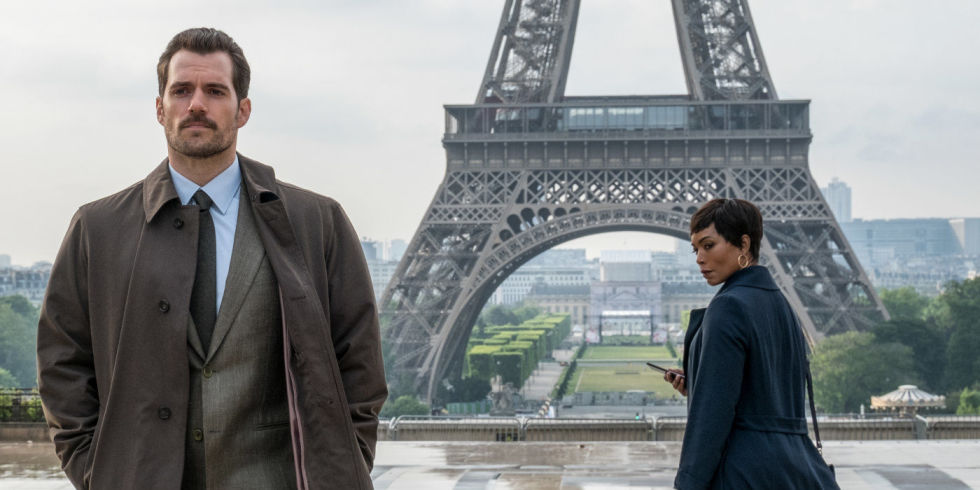
The line said by CIA director Erica Sloan (Angela Bassett), as we are introduced to her top assassin, rings true for the dynamic of Ethan Hunt and August Walker throughout the movie. If Hunt is all about deception using elaborate masks, Walker simply prefers a traditional, more straightforward approach, as portrayed in their first mission together. He is a bulldozer crashing and punching his way through every action scene without a second thought.
August Walker – portrayed by Henry Cavill donning a million-dollar mustache – along with Erica Sloan are just the newest additions to the sixth entry in the ever increasing but thrilling madness of the Mission: Impossible series.
Mission: Impossible – Fallout is different in that it’s more of a direct sequel to its predecessor Rogue Nation, which was a high point in the series that they brought back writer and director Christopher McQuarrie. And with that, much of the characters from the previous film are back: CIA director turned IMF Secretary Alan Hunley (Alec Baldwin), the IMF team of Benji (Simon Pegg) and Luther (Ving Rhames), Syndicate leader and main villain Solomon Lane (Sean Harris), and the adamant MI6 agent Ilsa Faust (Rebecca Ferguson), who proves to be the best female lead in the franchise.
Set two years after Rogue Nation, Fallout opens with Ethan Hunt receiving a mission to track down a new rogue organization called the Apostles, specifically its unidentified leader John Lark. They’ve separated from the Syndicate following the arrest of Solomon Lane. This time they seem to actually mean business, planning to steal three plutonium cores and targeting to blow up major cities, because they believe that “there cannot be peace without first a great suffering. The greater the suffering, the greater the peace.”
With McQuarrie returning, it’s only natural to expect the same masterful craftsmanship of Mission: Impossible action sequences. But Fallout is a step up from its predecessor, in both script (McQuarrie solely wrote the screenplay this time) and spectacle. There’s a continuing escalation in each set piece as you go further into the film, each one crazier and more death-defying than the last, but still within the realm of possibility. And even when it moves to a more intimate action scene – as it does with a 2-on-1 beatdown in a club bathroom (which has become one of my favorite scenes) – there’s a visceral ferocity in its violence that lets you feel the hard thump of every hit. And at its core, it’s what the franchise is all about.
Just as Rebecca Ferguson’s performance left a lasting impression in Rogue Nation, Henry Cavill seems to recognize that it’s his time to shine. He hasn’t really been given a role that’s allowed him to showcase his capabilities (with the exception of The Man from U.N.C.L.E), what with being chained down by the bleak atmosphere of Zack Snyder’s vision for Superman. However, Cavill proves he can go toe-to-toe with Cruise in bringing charisma and action. He has a definitive lasting presence whenever he’s on screen.
Tom Cruise continues to play Ethan Hunt with flawless mastery. He visibly appears to be in his top form for Fallout (even after suffering from an injury from a building jump), performing stunts that just gets more insane with each iteration. Past the halfway mark of the film, Cruise does his signature sprint (as tradition) for what felt like minutes, in a single shot, without even missing a beat, and it’s always a treat to behold.
As much as Mission: Impossible is Cruise, Fallout manages to indulge its supporting cast further, a much welcome change that started in Ghost Protocol. Simon Pegg, now a franchise regular, still carries the bulk of the comedic beats, and has developed a palpable chemistry with Cruise and the rest of the cast. Ving Rhames, one of the franchise’s OG cast, gets a chance to showcase a different side of Luther, because after all, he’s the only one that’s been there from the start.
In a way, Mission: Impossible – Fallout feels like the culmination of everything that’s happened so far in the franchise. McQuarrie incorporates bits and pieces from previous entries – like The White Widow (Vanessa Kirby) being the daughter of Max from the first film – to further strengthen the series’ cohesiveness. Every member shines in their own way, with character arcs that are well-written with a satisfying conclusion. Fallout could’ve easily been just a big spectacle, and it is one, but it’s supported with charismatic characters and an engaging story. It’s another high mark for a franchise that seems to only go up from the looks of it.
Rating:
 The Talking Screen