If you’ve followed Christopher Nolan‘s movies, you’d quickly realize his fascination in reusing certain concepts and storytelling tools. Perhaps the most obvious of them all is playing with time in his scripts. In his breakout film Memento, the mystery slowly unfolds in a non-linear fashion. Inception is a heist story that dives deep into multilevel dreams where time is of the essence. The bond of a father and daughter is proven to transcend even time itself in his science fiction outing Interstellar. Finally, Dunkirk tells three parallel narratives happening in different timelines that converge into one central event. Time is a hurdle our hero has to overcome in order to achieve the ultimate goal.
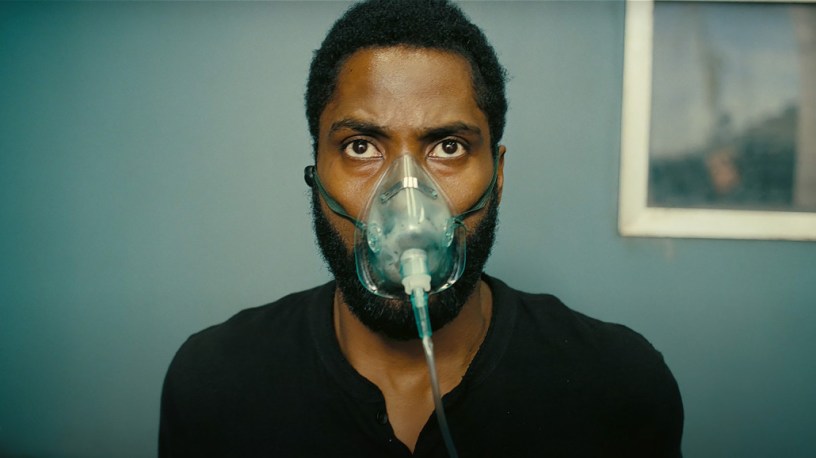
Nolan’s penchant for time-twisting narratives returns in Tenet. Here, time is a major tool, even weaponized, in the form of “inversion.” That is to say, in a parallel plane of existence, “inverted” objects move backwards in time. Bullets are swallowed back into their guns; explosions sucked back by bombs, and physical fights move forward and in reverse. The fact that it can be manipulated has led to some bad people discovering its doomsday-level potential that a clandestine organization has been formed to stop them. The organization, called Tenet, recruits an unnamed CIA operative (John David Washington) who’s simply referred to as “The Protagonist” throughout the film. Due to his loyalty to the system, he is assigned a top-secret mission to stop Andrei Sator (Kenneth Branagh in an accent), a wealthy arms dealer mastermind using inversion to execute his scheme. It’s the closest Nolan gets to making his own James Bond film, complete with a malevolent Russian villain hellbent on ending the world.
Unlike a James Bond movie, however, Tenet spends a majority of its 150-minute runtime explaining how everything works, resulting in characters unnaturally speaking expository dialogue. And yet it’s still virtually impossible to follow, in the initial viewing at least, as it continues to go down the rabbit hole of time travel that it’s just feels like a drag by the end of it. It’s one his “Nolan-isms” turned up to 11. Even Nolan seems to view it this way – the scientist who explains inversion early in the film says, “Don’t try to understand it. Feel it,” as if it’s a meta-commentary for what we are about to experience the rest of the film. And as I watched along, the idea of a repeat viewing (and subtitles) started to feel more and more mandatory to fully grasp what’s happening. At least in Inception, the concepts are creatively presented and never felt exhausting. In Tenet, it’s a gimmick.
It’s clear that the movie has opted to bask in its own labyrinthine applications of time travel – which Nolan fans would probably love to unpack and put it all back together – and left the task of engaging emotional registers to a minimum. Other than looking good in well-tailored suits and dresses, characters are so underdeveloped that it’s practically impossible to root for anyone beyond the default notion of stopping the bad guy. They’re just devices like the inverted objects they utilize in the film, especially Elizabeth Debicki, who plays Andrei’s wife Kat, and Robert Pattinson as the Protagonist’s partner Neil.
The sound mixing doesn’t help in the slightest, either. A lot of the dialogue, where much of the plot is explained, are muffled by moving trains, sailboat engines, or simply just a loud score. I mean, one would think not to mix important dialogue in scenes where characters are wearing masks and loud noises occur. It’s a major gripe that’s been apparent since The Dark Knight Rises and the whole Bane fiasco, but the director simply explained it as merely an artistic choice and part of the emotional experience as a viewer.
Even if Tenet is a hard film to comprehend, it doesn’t take away the craftsmanship in filmmaking from someone like Nolan. Genuinely thrilling action set pieces, an area where the director really excels, are abundant throughout the film. The dramatic opening rescue mission in the opera is already memorable, the freeport inverted fight scene grips you in tight and leaves you at the edge of your seat. For all its glaring flaws, Tenet is simply a visually impressive experience, a bombardment of spectacle that continuously builds on its own momentum, all complemented by Hoyt van Hoytema’s beautiful cinematography and wonderful performances by its cast.
Whether Tenet will be remembered fondly in the future is up in the air, although it will most likely be divided. It features both the highest of highs and lowest of lows in Nolan’s directing, having finally gone so far out in his exploration of time that it’s become a detrimental aspect to his storytelling skills. This is the first time I’ve felt indifferent to the story of a Nolan film before, even if it’s trying its best to explain it to you. The ambition is there, and it’s breathtaking to witness, but it leaves you undeniably exhausted in the end like the soldiers of Dunkirk.
Rating: ★★½
 The Talking Screen