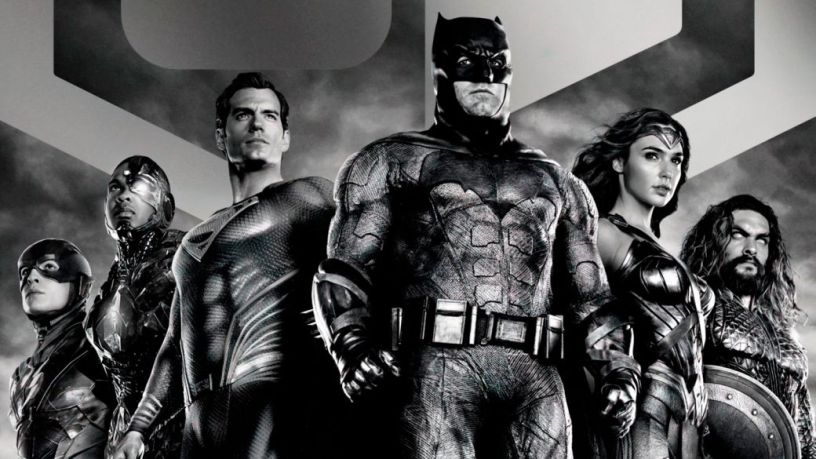
Just like the resurrection of Superman, Zack Snyder‘s original cut of 2017’s Justice League has been brought back from the dead and it’s finally here. Fans clamored for the Snyder Cut to be released for years, even getting traction and support from the cast themselves. Warner Bros. then finally gave the green light last year to #ReleaseTheSnyderCut to garner subscribers for their newly launched streaming service HBO Max, even pouring an additional $70 million budget for reshoots and CGI needs. Whether this sets a precedent for entitled, belligerent fans to will re-cut versions of films into existence is a different matter altogether, but this time, I’m inclined to be on their side as this version is leagues better than the original.
Before I continue, let’s get into a little backstory on how this all came about. After Snyder stepped down due to a personal family matter, Joss Whedon (director of Avengers and Avengers: Age of Ultron) was brought in to take over, and add in some of his signature one-liners that’s all over his Marvel movies. Not that the production of Justice League is already rife with problems and executive meddling before Snyder left anyway. Whedon ended up reshooting and rewriting most of the film down to under two hours, making the final product Zack Snyder’s in name only (Whedon didn’t get any directorial credit). The result is a rushed, messy patchwork of a movie, including a bunch of out-of-character quips, unnecessarily gratuitous scenes (e.g. Flash falling onto Wonder Woman’s chest), and incoherent storylines.
The bulk of Whedon’s version focused on Batman/Bruce Wayne (Ben Affleck) and Wonder Woman/Diana Prince (Gal Gadot), and pushed the rest of the team – Superman/Clark Kent (Henry Cavill), Aquaman/Arthur Curry (Jason Momoa), Flash/Barry Allen (Ezra Miller), and most importantly, Cyborg/Victor Stone (Ray Fisher) – to the wayside and leaving them underdeveloped. This cut, however, depicts them as fully-developed characters who had their own fair share of personal problems before being called upon to face an otherwordly threat.
The most notable of them all is Cyborg’s storyline. He gets a full arc of character development that he’s practically the main character, proving Snyder correct when he mentioned Cyborg being the heart of the team. ZSJL explores Cyborg’s flawed relationship with his father Dr. Silas Stone (Joe Morton) with more depth and empathy, and reaches a satisfying climax in him fully appreciating his condition as a gift. Now it’s easy to understand further why Ray Fisher is upset. Another character who benefits from the extended cut is the Flash, now that a lot of his cringey dialogue has been removed. And as we dive into his relationship with his incarcerated father, his character personality becomes much clearer, especially when he said he’s in need of friends. It’s apparent that Snyder is going for a family theme here, and how each hero deals with upbringing and loss. Batman being closer to the Frank Miller The Dark Knight Returns characterization is a welcome improvement as well, a big contrast to the dense and jokey in the 2017 version.

Unsurprisingly, the weakest out of the all the cast is Gal Gadot. The additional scenes gave her more to work with; a chance to showcase more range with the direction of Zack Snyder. But the confirmation of the hilariously monotonous delivery of Wonder Woman’s “Kal-El, no!” line not being a Whedon direction is disappointing. It’s the same dullness present in her narration of Darkseid’s first attack on Earth in “The Age of Heroes” chapter. On the plus side, she undeniably excels in action; Wonder Woman saving a group of school children is a visual treat, and it’s on par with her scene crossing No Man’s Land in Wonder Woman.
The least interesting aspect of ZSJL, funny enough, is the plot. The story is basically the same as it is in Justice League – an alien invasion on Earth is imminent and it’s up to a ragtag group of superheroes band together to defend it. While a Thanos-like big bad is introduced in Darkseid (an obvious set-up for the next movies that’s now been scrapped), the main antagonist our heroes face is still Steppenwolf. Now looking meaner and spikier, his motivations are presented much clearer, and his relationship with his “family” from their home planet Apokolips is elaborated even further. To be honest, it’s hard not to feel bad for him at times.
With a staggering four hours and two minutes runtime, it’s bound to contain a lot of Snyder’s self-indulgence. Scenes linger on for far too long, even more so with the overzealous use of slow-motion in most of the action. One example is Aquaman taking his time removing his shirt and jumping back into the ocean. Just when you think it’s over and we’re ready to move to next scene, more splashes of water appear and embrace him. But I have to admit, they are pretty fun to look at. Snyder excels in directing visually appealing set pieces, and he finally got to do it as much as he wanted.
Zack Snyder’s Justice League is split into seven titled parts, each containing its own self-contained chapter, which conveniently provides viewers chances for breaks if it gets too tiring to watch in one go. Not surprising considering this movie was originally announced as a mini-series. The self-indulgent fluff certainly isn’t a problem for the fans who made this happen. This is Zack Snyder unhinged, his original vision for the film realized, after all. It could easily be cut down to three hours, with a lot of the fluff remove for a more seamless watch, but that’s just like telling a painter to cut corners in his art. It’s personal.
Rating: ★★★½
 The Talking Screen