
Welcome to Hollywood Stories, a column where we dive into the tragic events and scandalous secrets behind all the glitz and glamour of Tinseltown. In this edition, we are going back to the silent film era to take a look at the shocking murder of prominent Hollywood director William Desmond Taylor, whose death still remains unsolved today.
In the early morning of February 2, 1922, what should normally be just another day on the job for Henry Peavey turned out to be a nightmare. Peavey, a cook and valet, entered the already opened door of his boss’ bungalow at 7:30 a.m. at the Alvarado Court Apartments in Westlake, Los Angeles, only to find a lifeless body on the floor. Lying face up with blood spilling out of his mouth, prominent Hollywood director William Desmond Taylor has been murdered. Peavey then rushed outside and hysterically yelled, “Mr. Taylor is dead!” to alert the neighbors of this affluent apartment complex, many of whom actors and actresses in Hollywood themselves.
William Desmond Taylor had the perfect life many aspiring stars could only dream of. Born in Carlow, Ireland on April 26, 1872, he started his career as an actor in Hollywood in 1913, then made his directorial debut the following year with the film The Judge’s Wife for Balboa Studios. Taylor soon rose to prominence as a director, and later signed with Famous Players-Lansky – the studio known as Paramount Pictures today – where he directed the majority of his films. Many of his movies featured the most popular stars of Hollywood at the time, including Wallace Reid, Mary Pickford, Mabel Normand and Mary Miles Minters (the latter two both are of particular interest in this case). Due to his rising influence and importance in Tinseltown, he was elected as the president of the Motion Picture Directors Association and remained in the role for several years.
This shocking murder of a high-profile Hollywood director shook the industry to its core that, despite studios intervening with a series of cover-ups, the scandal halted the careers of several stars and starlets, followed by an increased anti-Hollywood sentiment from the public thanks to the media circus that surrounded the case. Public interest was so high that publications in the US sold more newspapers than ever before. And yet, even after more than a century has passed, Taylor’s murder still remains unsolved and has become one of early Hollywood’s most notorious mysteries.
A Perfect Murder
Taylor’s cause of death was initially thought to be of natural causes, until forensic investigators arrived and rolled over the body to reveal that the 49-year-old was shot in the back with a 38-caliber pistol. According to news reports, investigators concluded that robbery was definitely not the motive as they found Taylor’s valuables – a wallet containing $78 in cash, an expensive Waltham pocket watch, a two-carat diamond ring on his finger, and a locket containing a photograph of comedic actress Mabel Normand – all intact. There were no further indications of missing articles from his home. Police also found a silky pink nightgown during their search of the apartment.
One interesting detail to note is that Charles Eyton, general manager of Paramount at the time, was one of the first to arrive at the crime scene upon hearing the news, even before the police showed up. It is widely rumored that he removed evidence from the scene in an attempt to avoid or at least minimize the impact of this scandal. Hollywood’s reputation was already rocky due to several scandals at this point, and the murder of an influential, well-liked director would certainly deliver another blow to the industry. Some even believe that Eyton planted false evidence at the director’s house, such as the pink nightgown, likely to hide the fact that, as some people theorize, Taylor was a homosexual. A detective assigned to the case is also convinced that Paramount was taking extensive efforts to silence their stars to avoid implicating themselves, despite having helpful information.
Now comes the big question: how did the killer pull it off?

A newspaper diagram of the night of the murder.Looking back to the night of the murder, Mabel Normand, by all accounts known to be the last person to see Taylor alive, claimed to have left his house at 7:45 p.m. Taylor accompanied her to her car, then blew kisses at each other as her chauffeur drove her off. Shortly after her departure, actor and neighbor Douglas Maclean and his wife Faith heard a loud bang. Faith Maclean then went to look outside in the direction of the sound, and saw a fairly tall man emerging from the front door of Taylor’s home. She described the man as “wearing a muffler about his neck and was at the time wearing a plaid cap pulled over his eyes.” Maclean also recalled the man going back into the house as if he’d forgotten something, re-emerging out of the door a few seconds later and smiled at her before leaving through the courtyard. Thinking nothing of it at the time, she assumed that the noise they heard to be just a car back-fire.
Furthermore, two witnesses at a nearby gas station told investigators that an unknown man similar to Maclean’s description inquired where Taylor resided just shortly before 6:00 p.m. on the night of the murder. They directed him to the Alvarado apartments, and never saw the man again. The next day, police discovered six cigarette butts scattered around – some barely smoked – the alley behind Taylor and Maclean’s apartments, reinforcing the belief that this is where the killer bided his time until he saw an opportunity to strike. Many people believe that, as Taylor saw Normand off, the killer used this moment to slip in through the open door and waited for him inside.
A Long List of Suspects
More than a century after the murder, it’s still up in the air as to who really killed William Desmond Taylor. Was it a disgruntled employee back for revenge, a jealous mother of a rising star, or the shady connections of a drug-addicted actress? While the mystery surrounding the case produced a long list of possible suspects, the police had a few notable persons of interest on the top of their list.
Edward Sands, a former secretary and valet of Taylor, was reported to be the leading suspect. He had multiple records of criminal activity including forgery and embezzlement, and was dishonorably discharged from the Navy even before serving under the director. In one instance, Sands forged several checks amounting to $5,000 and wrecked Taylor’s car while he was on a trip in Europe. He eventually disappeared until a few months later when he burgled Taylor’s home, stealing some jewelry and taunting him by sending a pawn ticket back to his boss. What’s interesting is the ticket was addressed to William Deane-Tanner, Taylor’s real name. It turned out Taylor had a secret past, deserting a stage actress wife and a daughter before moving to Hollywood for greener pastures. This shows Sands knew of his true identity, and was deliberately taunting his former employer. Despite their efforts, the police were unable to find their prime suspect, and Sands was never seen or heard from again after the murder.

Silent film comedian Mabel Normand.Being the last person to see Taylor alive, Mabel Normand naturally became a person of interest. She was subjected to a “long and grueling” interrogation at her home by the Los Angeles Police Department in hopes to get information about Taylor’s murder. According to Robert Giroux’s book A Deed of Death, Taylor was in love with Normand and vowed to help get rid of her cocaine addiction, as part of his bigger campaign to clean up Hollywood of drugs. Because of this, Giroux believes that this led the drug dealers to hire a professional hitman to assassinate the director. Normand was shortly ruled out as a suspect, but the revelation of her drug addiction and relationship to the director did irreparable damage to her reputation and career.
Another major suspect in this case is Charlotte Shelby, the mother of former child actress Mary Miles Minter. A classic case of suffocating stage mothers, Shelby was the one who pushed her daughter into acting, and after finding success in the industry, became overly protective of her “investment.” Minter, only 20 years old at the time, was very vocal of her love for the 49-year-old Taylor, who had served as a sort of mentor in her career. Although this love was unrequited, she constantly wrote him juvenile love letters which were later discovered in his home during a search. Many theorize that this was Minter’s way of escaping from her overbearing mother.
In the 1967 book A Cast of Killers, which retraced director King Vidor’s own investigation of the murder, biographer Sidney D. Kirkpatrick firmly believes that Shelby was deathly afraid of losing her daughter to a much older man, and so in jealous rage, killed the director. It was also reported that Shelby owned a .38 caliber pistol with bullets similar to the one that killed Taylor. And after this information went public, she reportedly threw the gun into a Louisiana bayou.
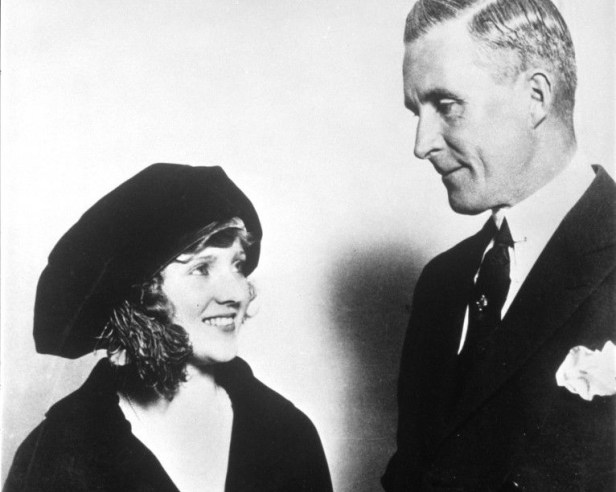
Mary Miles Minter and William Desmond Taylor.Like a plot twist in a thriller film, our last suspect only came into light decades after the murder. After suffering from a heart attack in her Hollywood home, Margaret Gibson, an actress who appeared in more than 140 films, made a shocking confession on her deathbed in 1964. Gibson, who was living under the name of Pat Lewis at the time, confessed to her neighbors that she was once a silent film actress, and that she had shot and killed a man named William Desmond Taylor. Apparently, she had made similar remarks before while watching a TV program called Ralph Story’s Los Angeles. When a segment on the unsolved murder of Taylor aired on the show, the actress suddenly became “hysterical and blurted out that she’d killed him and thought it was long forgotten.” Gibson was never a person of interest during the primary investigation as there were no known connections between her and Taylor other than working together in theater and a couple of Hollywood films.
Over a century after the murder, much of the police files and physical evidence surrounding the investigation have already been lost. Still, the unsolved murder of William Desmond Taylor continues to be of high interest among true crime enthusiasts and popular culture in general. His case has been the subject of several books, podcasts, and documentaries throughout the years, all with their own theories and conclusions as to who really killed the director. But no hard evidence has ever come up to conclusively link the murder to any particular suspect, and the combination of studio interference and crime scene tampering might as well have ultimately hindered the investigation of Taylor’s murder right from the beginning.
PREVIOUS: Peg Entwistle, the Starlet Haunting the Hollywood Sign
 The Talking Screen
This is a fascinating account, and you wonder what might have been the outcome if Charles Eyton hadn’t gotten to Taylor’s bungalow before the police.
LikeLiked by 1 person